
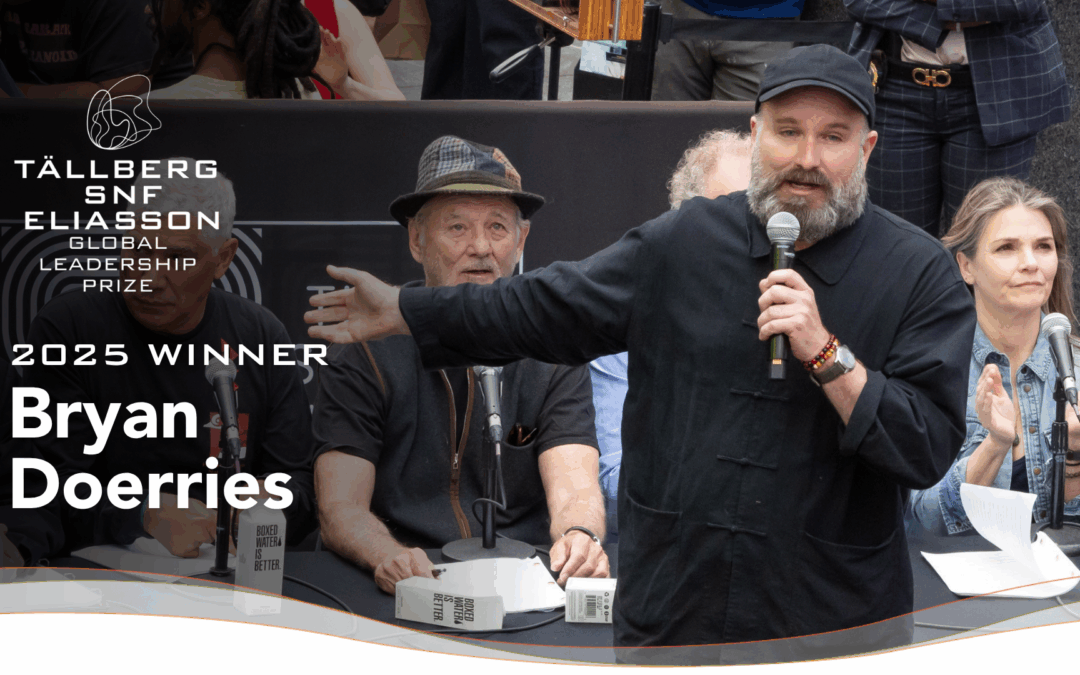
Bryan Doerries believes that the wisdom of ancient drama still has the power to change lives. As Artistic Director of Theater of War Productions, he brings the tragedies of Sophocles and other classic playwrights into hospitals, military bases, prisons, and communities facing trauma—transforming performance into a tool for understanding, dialogue, and repair.
The idea was born from personal loss. As a young man caring for his partner during her final illness, Doerries found solace in the timeless plays he had studied as a classicist. Their raw portrayals of grief, helplessness, and moral conflict felt like messages from across millennia—proof that human suffering and resilience are constants of existence. That insight became his life’s work: to use these ancient stories to help others face pain and find meaning.
At the heart of Theater of War’s method is simplicity. World-class actors perform short readings from ancient texts, followed by open discussions in which audience members share their own reflections and experiences. The performances are deliberately stripped of theatrical polish—what matters is the honesty of the exchange. “It’s not about performance,” Doerries says. “It’s about what happens after the performance—the conversation.”
That conversation has taken place in extraordinary settings. Doerries has brought Sophocles’ Ajax to combat veterans, giving them words to articulate invisible wounds of war. He has staged Antigone in Ferguson, uniting police officers, activists, teachers, and Michael Brown’s own classmates in a chorus that transcends division through shared storytelling. In prisons, shelters, and disaster-stricken towns, he has used theater to help people confront loss, guilt, and moral injury—not as therapy, but as truth-telling.
Everywhere he works, the results are the same: hierarchy dissolves. A general listens to a private, a nurse to a grieving mother, an audience to itself. In those moments, the plays become mirrors—showing what is broken, but also what might be healed.
During the pandemic, Doerries and his team adapted their work for a virtual world, using digital platforms to convene audiences across continents. The company has since begun experimenting with new forms, including readings of long-form journalism performed by actors to provoke civic dialogue about pressing public issues. The goal remains unchanged: to build spaces where empathy and reflection can flourish amid polarization and noise.
Doerries’s art is not about escape—it is about encounter. By turning ancient tragedies into living conversations, he helps societies see themselves more clearly and find courage in shared vulnerability. His work reminds us that storytelling is one of humanity’s oldest medicines, and that healing begins when we face our collective pain together, with the lights on.
Thank you for recognizing Mr. Doerries. I have participated over Zoom numerous times and always found the sessions powerful, specifically because of how the post-performance conversation is facilitated, and the seemingly inevitable unfiltered expression by audience members. I cry every time with a feeling of hope for humanity.
Bryan Doerries is a brilliant man and a saint. I’m so glad he has been acknowledged here!
Bryan Doerries deserves this with much honour. I saw his work bring the surge of pain while simultaneously allowing empathy and intellect to begin the healing. And for me, his work was tectonic.